Germs Shouldn't Survive Room Turnover
The Problem
Harmful pathogens remain on commonly touched surfaces – even with the best liquid chemical disinfection efforts. In fact, only 48% of patient room surfaces are cleaned and only 28.8% of the surfaces cleaned are properly disinfected.1
Our Solution
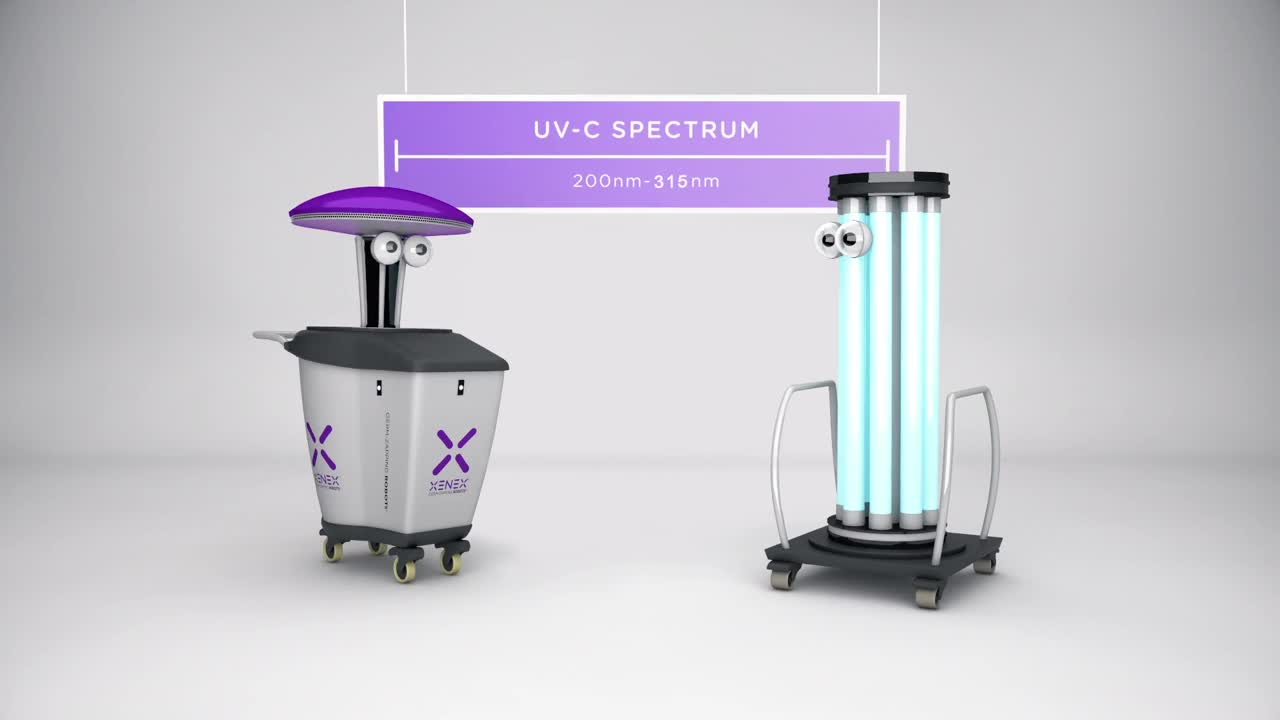
 Our FDA authorized pulsed xenon, broad-spectrum (240-315nm) UV product uses targeted cycle times to inactivate spores and a variety of vegetative bacteria.
LightStrike+ provides a validated means to significantly reduce the number of pathogens that survive liquid chemical cleaning, with cycles as little as 2 minutes2.
Xenex’s best practice approach for microbial reduction has been used in over 1,200 healthcare facilities3 to help Break the Chain of Pathogen Transmission™. Hospitals using Xenex programs have reported significant reductions in bacterial load on surfaces that are missed during the liquid chemical cleaning process, reducing their risk of pathogen transmission from surfaces to healthcare workers or patients.
We Don't Rely on Reflectivity of Surfaces
Because Research Proves You Can't
Surfaces are highly variable in their ability to reflect light, and surfaces naturally create shadows where the light will not be able to reach for optimal UV light saturation. For instance, plastic surfaces have less than 2% reflectivity with UV (see reflectivity resource). This is why our best practice with the LightStrike+ is 1 cycle on each side of a patient bed and 1 cycle in the bathroom. This allows the light to hit shadowed areas and to flip over high-touch items like phone receivers.
Tough on Germs, Not on Expensive Equipment and Surfaces
Just like liquid chemicals, some UV products cause more damage to surfaces than others do. Our Pulsed Xenon UV has been proven to not harm surfaces like narrow spectrum Mercury UV bulbs do4.

FDA Sets a New Standard by Authorizing LightStrike+, The First & Only Microbial Reduction Robot
Our best practice approach and FDA authorized LightStrike+ Robot provides unique advantages to effectively reduce the microbial load in rooms/areas and on commonly touched surfaces.